 There is news from Isak!
 Life Members
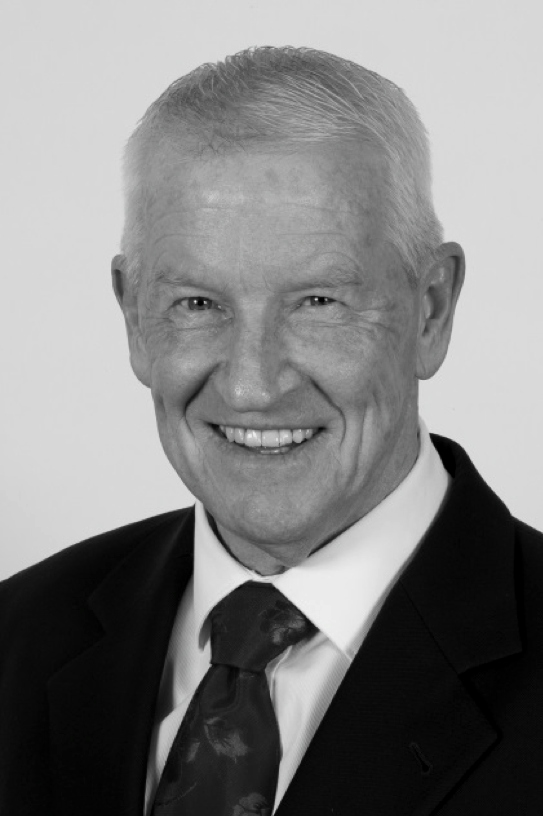
Michael Marfell-Jones
Upper Hutt, New ZealandProfessor Mike Marfell-Jones, educated in New Zealand, England, and Canada, is a leading figure in kinanthropometry. He is currently treasurer of ISAK in New Zealand and a Level 4 Emeritus Anthropometrist. After beginning his career in secondary education, he developed an extensive academic career in New Zealand and Canada. With over 40 years of experience in sports science, he has served as vice-president of ISAK, as well as president, secretary general and life member.
Trained at the University of Otago (New Zealand), Loughborough University (England) and Simon Fraser University (Canada), Professor Mike Marfell-Jones is the current Treasurer in New Zealand of the International Society for the Advancement of Kinanthropometry (ISAK) and ISAK Level 4 Criterion Anthropometrist Emeritus. He is Professor of Kinanthropometry at the Catholic University of Murcia, Murcia, Spain, but resides in Wellington, New Zealand, for much of the year. Early in his career he was involved in secondary teaching in New Zealand, before moving into the tertiary sector, working in universities in both New Zealand and Canada. After more than 40 years working with sports scientists and athletes, his interests are in anatomy, sports science and anthropometrist training. Professor Mike was Vice President of ISAK from 1996 to 2000, President from 2000 to 2008, Secretary General from 2008 to 2012, Past President from 2008 to 2014, Treasurer since 2014 and President again from 2014 to 2024. He was appointed Life Member in 2008 and Level 4 Emeritus in 2024.
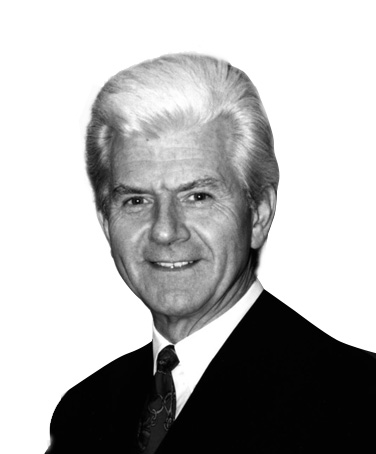
Jan Borms
Gent, BelgiumJan Borms (born Aalst, 1940) was a leading Belgian scholar in kinanthropometry, human growth and health promotion. After joining the VUB (Vrije Universiteit Brussel) in 1963, he became professor and later Head of Human Biometry and Biomechanics, earning emeritus status in 2001. He founded and served as the first President of ISAK and received its first Honorary Life Membership.
Jan Borms (Aalst, Belgium, 1940) obtained his bachelor's degree in Physical Education from Ghent University (1963), a master's degree from the University of Oregon (1965) and a PhD from the Vrije Universiteit Brussel (1972). He began at the VUB in 1963 as an assistant and later as a professor, specialising in kinanthropometry and the promotion of health and physical activity. He was director of the Department of Human Biometrics and Biomechanics and in 2001 was named Professor Emeritus after a career spanning five decades. He was president of the IWGK (International Working Group on Kinanthropometry), the precursor to ISAK, and the first founding president of ISAK (1986-1988), as well as Past President and first Honorary Life Member. He also stood out in the ICSSPE (International Council of Sport Science and Physical Education), where he chaired the Editorial Committee. He published extensively on kinanthropometry, human growth and health, participated in studies such as the Medford Boys' Growth Study and MOGAP, and was co-editor of the series Medicine and Sport Science. He also organised and advised on international courses and conferences related to the Olympic and Commonwealth Games. He made over a thousand television and radio appearances promoting healthy lifestyles. He was also a commentator on gymnastics competitions, including six Olympic Games. His last contribution was the editing of the 5th Directory of Sport Science in 2008.

William D. Ross
Surrey, CanadaDr. William D. Ross, winner of the Philip Noel-Baker Award in 1987, defined the term kinanthropometry in the 1970s. It focuses on quantifying body size, shape, proportions and composition to describe or explain function, growth, maturation and performance. Since 1981, he has been the scientific director and principal owner of Rosscraft Innovations, leading instrument design, publications, and software development.
Dr. William D Ross, BPE, MSc, MA, PhD, DHC. Philip Noel-Baker Award recipient 1987. The term Kinanthropometry was defined by William D. (Bill) Ross in the 1970s to to bring together scientists who appeared to be working in quite disparate areas but whose studies had tremendous relevance to each other. The quantification of Body Size, Shape, Proportion and Composition to describe or explain Function, Growth, Maturation and Performance. As the Scientific Director and principal owner of Rosscraft Innovations since 1981, Bill directs Rosscraft’s creative units in design and manufacture of instruments. He is an scientific author and coordinator of supporting publications and software development. Bill is well-known internationally and encourages cooperative research among human biologist and health professionals, particularly the ‘NOW’ generation. This is unrelated to age, no gender, ethnicity, or economic status and has everything to do with opportunity to become involved as participants and witnesses in research. It involves character and a sense of mission for fostering optimal growth and development of all the children and all the people and helping maintain health, vigor and happiness of adults throughout their life span.

Johannes Hendrik De Ridder
Potchefstroom, South AfricaProf. Dr J. Hans de Ridder is a leading South African academic and Executive Director of the School of Human Movement Sciences at North-West University. Awarded the Stals and Albert Strating prizes for his contributions to kinanthropometry and preventative medicine, he also achieved ISAK Level 4 accreditation and later co-authored the International Standards for Anthropometric Assessment. Former ISAK President and current Past-President.
Prof. Dr. J. Hans de Ridder is a professor and executive director of the School of Human Movement Sciences at North-West University in Potchefstroom, South Africa, and holds a C1 rating from the National Research Foundation. In 2002, he received the Stals Award for Human Movement Sciences and in 2011 the Albert Strating Award for Preventive Medicine, being one of the youngest recipients and the first at his institution to receive the Stals. He has held ISAK Level 4 Accreditation since 2005, renewed in 2024 in London. He co-authored the International Standards for Anthropometric Assessment and held key positions at ISAK: Secretary General (2002-2008), President (2008-2014) and subsequently Past-President. In 2014, he was named a Life Member and in 2024 he received the ISAK President's Award, being the second person to achieve this. In his academic work, he has supervised more than 70 master's and doctoral students and has published 88 articles in indexed journals. He is a member of the Board of Directors of the GCH Foundation, President of GoFPEP 2014 and founder and current President of the BRICS Council of Exercise and Sport Science. He also chaired the BRICSCESS 2019 Congress, the Sport Science Summit 2024 and the Brain Health and Concussion Conference 2025 in South Africa. He is married to Elsie and has three children.
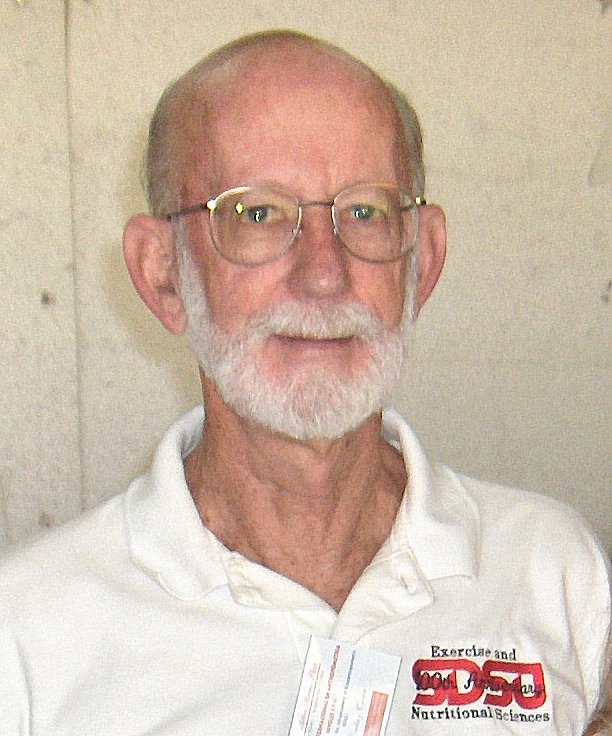
J.E. Lindsay Carter
El Cajon, United StatesDr. Lindsay Carter, born in New Zealand, became a leading figure in kinanthropometry. After studies in Otago, Auckland, and Iowa—where he earned his Master’s and Doctorate—he taught at the University of Otago and later spent three decades as a professor at San Diego State University. Co-developer of the Heath-Carter Somatotype Method, he conducted landmark studies with Olympic athletes and authored over 130 publications.
Dr. Carter was born and raised in New Zealand. After graduating from the University of Otago and Auckland Teachers College, he held research and teaching positions at the School of Physical Education in Otago. Between 1956 and 1959, he was a Fulbright scholar at the University of Iowa, where he obtained his Master's and Doctorate degrees. From 1962 to 1992, he was a professor at San Diego State University, teaching Applied Anatomy, Biomechanics, Adapted Physical Education, Growth and Development, and Kinanthropometry. He received the Outstanding Faculty Award and the Exceptional Merit Service Award, and is currently a professor emeritus, continuing his research and consulting work. His research has focused on the structure and function of athletes and non-athletes. He co-developed the Heath-Carter Somatotype Method, the most widely used method in body composition studies, and participated in research with Olympic and world championship athletes. He has been a consultant in 18 countries and a speaker at numerous events. Author or editor of 13 books, 29 chapters and 95 articles, he has 137 publications to his name. He was president of ISAK, an honorary life member and criterion anthropometrist, as well as a member of prestigious scientific organisations. He received two honorary doctorates and has academic facilities named after him, including the J. E. Lindsay Carter Clinic and Archive in New Zealand.